
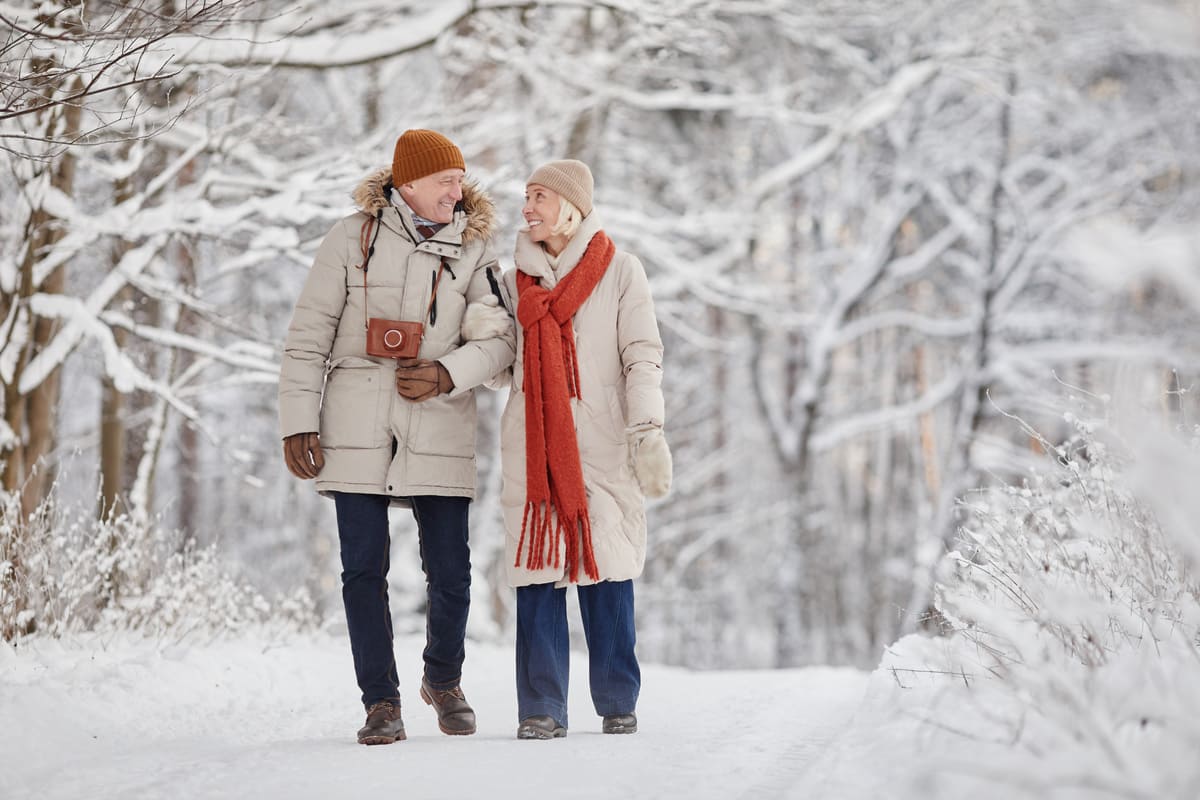
1. Prevent Slips and Falls
Icy and snowy conditions increase the risk of falls.
Precautions to Take:
- Clear steps and walkways before walking.
- Salt or sand your walkways
- Wear boots with non-skid soles.
- Replace worn cane tips and consider ice-grip attachments for extra traction.
2. Be Aware of Preexisting Health Conditions
Certain chronic health conditions can make older adults more vulnerable to cold weather risks. If you or a loved one has a medical condition, take extra precautions during winter.
Tip: In-Home Care and Health services can help monitor health, provide support, and ensure safety during the colder months.
3. Dress Smart and Stay Warm
Cold weather can lead to hypothermia if precautions aren’t taken.
Precautions to Take:
- Keep indoor temperatures at 65°F or warmer.
- Stay dry, wet clothing chills the body quickly.
- Layer clothing: 2–3 thinner layers are warmer than one thick layer.
- Essential winter wear: hats, gloves/mittens, winter coat, boots, and a scarf to cover your mouth and nose.
4. Stay Active During the Cold Months
Remaining active is essential for seniors’ physical and mental well-being. While outdoor activities may be limited, caregivers and families can find creative indoor options like light exercise, stretching, or games.
Tip: Adult Day Programs offer safe, engaging environments for seniors to stay active and social during winter.
5. Limit Time Outdoors
Avoid prolonged exposure to cold temperatures. If you must go outside, dress appropriately and return indoors quickly.
Tip: Adult Day Programs and In-Home Care and Health services provide safe, warm environments and companionship during winter months.